
By Lily Dennis
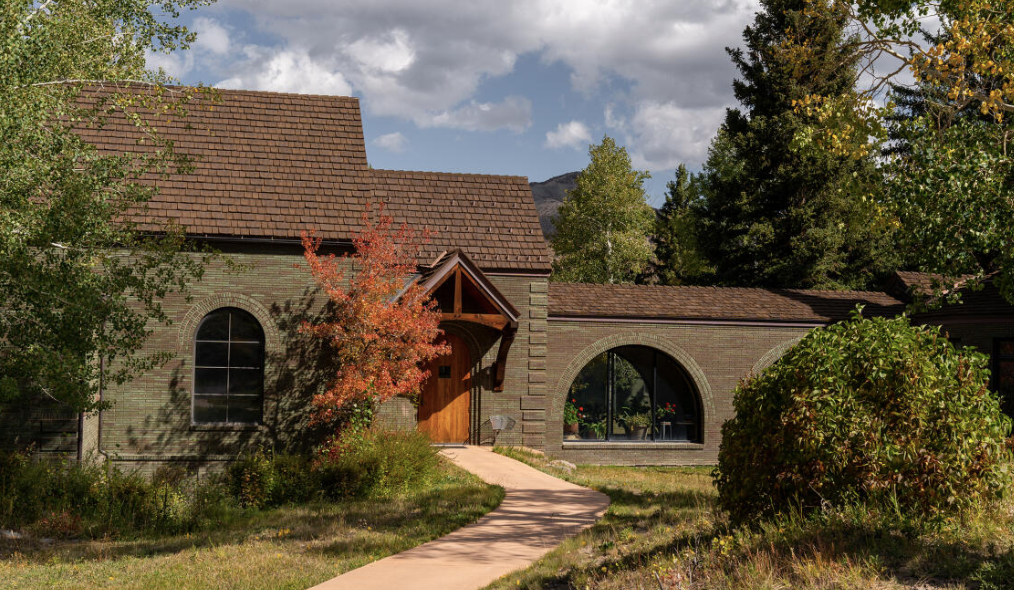
St. Benedict’s Monastery in Snowmass, CO. (image courtesy of Farm & Ranch property sellers)
On Dec. 15, a catholic monastery located in Snowmass, Colorado, was bought by the CEO and Co-founder of Palantir Alex Karp for a sum of $120 million.
The property had initially been sold to ‘Espen LLC,’ a company incorporated in Delaware. It wasn’t until after the sale was completed that the Wall Street Journal reported that the buyer behind the purchase was actually Alex Karp, the CEO of Palantir. The purchase was the most expensive residential purchase in the entire history of Pitkin County, where the sale was transacted, as mentioned in a recent article from The Aspen Times, a publication based in Snowmass, CO.
The monastery, called St. Benedict’s, as well as the 3,700 acres it resided on, had been put up for sale in early April of 2024. The decision to sell St. Benedict’s and the extensive property it stood on was made by the leadership of the Trappist order, officially known as the Cistercians of the Strict Observance, who had previously owned the monastery. The order based its decision on the “aging and dwindling population of monks in Snowmass,” as reported in an article by the Colorado Sun.
The Cistercians of the Strict Observance are a Catholic religious order with a longstanding presence within the Snowmass monastery. The property, as well as St. Benedict’s itself, had been owned by them since 1956, marking the start to many years of monastic living under the Trappist way of life, which entails working in prayer, reverence and silence to follow the “Rule of St. Benedict.”
The monastics within St. Benedict’s carried out these religious values for nearly 70 years, living in quiet simplicity and seeking to “let go of daily distractions to free the mind and heart for deep contemplation,” as described within the Trappist website.
In an interview with Pitkin County Commissioner Jeffrey Woodruff as facilitated by the Aspen Times, Woodruff speaks of the community within St. Benedict’s. “The monastery had brought neighbors together to marvel at the awe of the natural surroundings. The Order of Saint Benedict has guided this valley spiritually for decades,” Woodruff said.
With the importance that the monastery held in its local community, there have been questions about the property’s future under Palantir CEO Alex Karp’s ownership. For a company based in “AI-powered automation for every decision,” a mission statement described within Palantir’s homepage, speculations are rampant. What would a billionaire CEO want with an old monastic property?
The most probable use would be residential. This conclusion was reached by Kaya Williams, a journalist who has followed this story for around two years, in an interview with Aspen Public Radio.
Williams said, “The most likely use at this point is going to be a private residence, and it’s going to be more like a secluded—somebody’s house—not a dense monastery suburb. That’s basically out of the question based on current land use rules.” Although alarm bells may be ringing after hearing of a CEO of Palantir buying a former monastery property, there are rules in place to safeguard what exactly the land can be used for. This means that, at the very extreme, St. Benedict’s monastery and the surrounding property can’t just morph into a huge AI data center overnight.
“One thing that we know for certain is that he loves solitude. He likes going cross-country skiing and values privacy,” Williams said, adding that “these sorts of ideas suggest that he’s not going to go in there and develop it and flip it.”
As for the gravesites of the former monks of St. Benedict’s monastery, the Colorado Sun reports an “access easement” to the cemetery on the property, allowing for the possible visitation of the deceased monks’ families and Trappist order members.