
By Nicholas Merl
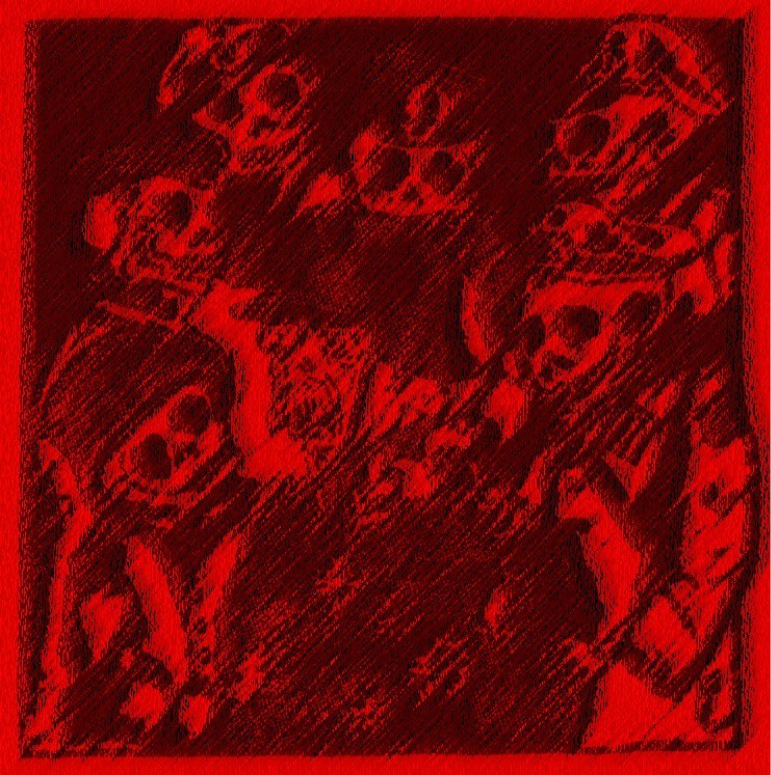
Detail from the cover of Carl Mertens’ 1926 book “Verschwörer und Fememörder” (Conspirators and Feme-murderers). (Nicholas Merl/Radio 1190)
The late morning of Oct. 6, 1920, in a forest in southern Germany. The body of a 19-year old girl lies among the sea of trees, ghostly white. Swollen tongue protruding between blue lips, her head is propped up and tied to the base of a spruce tree with a rope.
The body has been arranged carefully, meant to be found. In a few hours, two unemployed teenagers from a nearby village will spot the body while walking along a nearby path. They will also be the first to read the chilling couplet scribbled on a note tied to the corpse: “You betrayed the fatherland, and have been judged by the black hand.”
Her name was Maria Sandmayer. She would not be the last.
As the morbid details of Sandmayer’s case emerged, it became clear that she had been involved in something much larger. She had previously worked as a cook on the estate of a nobleman, Count Fischler von Treuberg, near the town of Augsburg. Her relationship with her employer was reputedly poor; in one letter to a friend, she refers to Treuberg as “the beggar-count,” and he repeatedly mistreated her. Within a few months she had had enough and returned to her hometown, the nearby village of Odelzhausen.
Travelling south through the languid Bavarian landscape, Sandmayer was unwittingly tracing a line through history. Germany was still undergoing the seismic aftershocks of the first world war, which had dethroned the emperor and plunged the country into a civil war between communist workers and the ultraconservative remnants of the military. As Sandmayer made her way past recent battlefields and mass graves, she carried a secret that would turn her into a tiny spark in the blaze of violence.
A little over a year before Sandmayer began her fateful journey back home, columns of ultranationalist paramilitary “Freikorps” had drenched the south in blood. They acted with the blessing of the feeble government of the newly declared republic:, to crush an attempt by Bavarian workers to establish a socialist state. A year later they had become forest men, meeting in secret places and at night, conducting drills and gathering weapons.
They wanted revenge against the authors of Versailles, the enemies who had humiliated the Reich in the great war. Even more, they wanted revenge against the traitors, the Jews, the communists and the government they felt had abandoned Germany’s honor. They wanted a final victory.
Yet as per the statutes of the Treaty of Versailles, ratified in 1919, Germany would have no armies capable of waging war. The reorganized military was limited to 100,000 men. Heavy weapons were banned, as were the ultranationalist paramilitary units that were still hunting rebels across the Reich.
Under pressure from the allies and fearing the increasingly mutinous Freikorps, the Berlin government passed two laws. The first, passed in 1919, effectively banned civilian gun ownership. The second, passed in 1920 after Freikorps units had attempted to overthrow the government, banned the paramilitary formations.
The conservative armed forces and the various armed groups responded by establishing vast underground networks in the hope of rebuilding Germany’s army in the shadows. Maintaining secrecy was of maximum importance. In the increasingly paranoid and fanatical minds of the Freikorps, anyone who broke this rule was nothing less than a traitor to the fatherland. And there was only one punishment for traitors.
When Maria Sandmayer returned home to Odelzhausen in the late summer of 1920, she had hatched a plan to get back at her former employer. While working on his estate, Sandmayer had discovered that Count Von Treuberg had been stockpiling weapons for local nationalist militants. He had over 80 rifles stowed in a closet and cannons hidden in a granary. Egged on by the promise of a financial reward, Sandmayer set out to contact the authorities.
On Sept. 23, Sandmayer walked into a local printing press and asked where she could report illegal weapons caches. But instead of sending her to the police, she was told to speak to Alfred Zeller, a leader of the recently established civil defense. The civil defense had been established by the government in an attempt to create a Versailles-compliant and less mutinous alternative to the Freikorps. In practice, it was little more than a front organization for it.
Zeller initially listened to Sandmayer’s story and assured her that he would investigate. Sandmayer, satisfied by this, went on with her life. A few days later at a civil defense gathering, Zeller loudly boasted about tricking a young woman from Odelzhausen into reporting a weapons cache to him instead of the police. One of the men present, Hans Schweighart, decided to investigate himself and discovered Sandmayer’s identity.
The verdict was reached in secret. On Oct. 5, Schweighart and two other men drove to Odelzhausen and caught Sandmayer walking home. They ordered her to get in their car under the pretense of questioning her about the weapons depot. They then drove her into a forest where one of the men, Hermann Berchtold, strangled her. The police investigation was bungled, giving the murderers enough time to flee abroad. Schweighart was arrested in 1921 in Austria, but was never tried and eventually released after a year in jail. He joined the Nazi party soon after. The charges against all three perpetrators were dropped in 1925. In 1931, Berchtold openly admitted to strangling Sandmayer, but there were no further consequences for him or the others.
The Weimar Republic’s brief lifespan can be understood almost entirely through the conspirative networks that spiderwebbed outwards from the country’s military. To the outside, Germany attempted to present itself as a modern liberal democracy, long past the troublesome militarism that had plunged it into the abyss in 1914. But the country’s armed forces, together with the loosely aligned underground network of right-wing paramilitary groups, despised the government and were ready to resort to any means – including murder – to undermine it. According to conspiracy theories promulgated by the military, the republic was little more than a Jewish plot to undermine the foundations of the German nation by subsuming it under communism, capitalism and ultimately preparing it for racial dissolution.
The case of Maria Sandmayer is a tragic instance that became emblematic of Germany’s troubled democratic experiment in the early 20th century. It was also, in many ways, a ritual calling back across centuries to something much older than the war, older even than German nationhood itself. The name of the silent terror that soon morphed into a nationwide panic echoes with the memory of 500 years of blood.
Violence against presumed “enemies” was a natural part of the grand “national struggle.” But when it came to those considered national traitors, the secret armies had a special approach: the “feme.” The term increasingly cropped up in the language of the far-right during the early 1920s. It first entered popular consciousness through its inclusion in the constitution of the Organisation Consul, a secretive terrorist network made up of Freikorps operatives. Among clauses forbidding membership by Jews and “racial foreigners,” the OC had one simple warning to its members and those who would dare oppose it: “traitors fall to the feme!”
“Feme” is an archaic term. Originating in the German-speaking core of the Holy Roman Empire (or Reich in German), the word was first attested from the 13th century onwards, originally simply meaning “punishment.” As the Holy Roman Emperor’s domain was increasingly carved up by local feudal lords, legal authority collapsed in many locations. As a result, groups of imperial subjects began forming local “free courts,” which soon became known as “feme courts” to enforce law. In an attempt at clawing back power from the Reich’s territorial nobles, the Emperor granted these groups the so-called “blutbann” (lit. “blood-right”), the legal power over life and death that could only be wielded by the Emperor and his chosen delegates.
The outcome was that the feme courts developed into an increasingly powerful and cryptic institution: proceedings were often held clandestinely, sometimes without the knowledge of the accused and frequently accompanied by bizarre symbolism and ritual. Death sentences were common, and “defendants” were often abducted and killed in secret.
By the mid-15th century, the feme courts had effectively become powerful networks capable of terrorizing the empire’s inhabitants with impunity. The Emperors eventually intervened and began to curb their power, leading to a long decline into obscurity from the 16th to early 19th centuries. Still, the feme courts persisted in isolated places, with reduced powers, until Napoleon conquered the Holy Roman Empire and abolished the practice in 1806. But while the original feme fell into obscurity, it cast a long shadow over history.
The memory of the feme – a secretive association of judges assembled to preserve and exercise the authority of the empire or Reich in the shadows – resonated with many early romantic writers, and became a common literary trope in the romantic writings of Johann Wolfgang von Göthe and his contemporaries. In the romanticized version, the feme became an institution of justice in times of trouble, a hidden redoubt for the defenders of law and order. It is precisely this perspective that survived into the chaotic aftermath of the German Reich’s defeat in the first world war, inspiring the twisted imaginations of the secret armies.
Sandmayer’s killing was far from the only clandestine killing undertaken by the right-wing underground. She is distinctive in that she was not a member of the conspirative groups herself. Officially, the feme was the select method for the execution of fellow members suspected of betrayal, or, broadly, “traitors to the national interest.” Because of the secretive nature of the murders, the frequent police collaboration in covering them up and the often sensationalized coverage in the press, the exact number of victims are unknown. Officially, authorities counted less than a dozen in Bavaria, for around two dozen across the entire territory of Germany. The “unofficial” count presents a much more grim tally.
On March 4, 1921, members of the civil defense men gunned down a waiter named Hans Hartung and dumped his body in a nearby river. On June 5, militiamen arrested four men suspected of being polish spies before murdering them in a local quarry. The heads of the men were split open and their bodies mutilated, with one of the victims having been stabbed 73 times. Eight days later, police sergeant Johannes Buchholz was shot in the back of the head in Berlin.
As a historical phenomena, the bloodletting appears as general as it does directionless. The feme floats through the early 20s without a precise definition, just beyond the reach of any true understanding. Indeed, what began as a documented methodology of terrorizing the ranks of stormtroopers into discipline soon lost itself in a carnivalesque excess of indiscriminate brutality, sensationalistic press reports and simple gangsterism. A unified appraisal is only possible when viewing it as another mask of the rolling tremors that would draw up into the fascist tidal wave at the end of the decade.
When the student Karl Baur was murdered in February 1923, it was to prevent him from revealing plans by one militia to attempt a coup. But less than a year earlier, cigar merchant Kurt Hermann – a member of the so-called guard society “silesia” – was murdered by members of the rival Freikorps Rossbach, his killers burglarized his house. The men later accused him of collaboration with Polish forces.
Perhaps the best example of the increasingly frenzied inertia of the feme – and of right-wing violence in the early 20s as a whole – is the Parchim case. The victim was Walter Kadow, a schoolteacher and local far-right activist who was a member of the aforementioned Rossbach group in the northern city of Parchim. Kadow was unpopular with the other Rossbach men, primarily because he had repeatedly taken loans from several prominent members without paying them back. In 1923, Kadow had arranged for an advance payment of 30,000 marks to be paid out to the militia, only to pocket the money himself.
Upon discovering Kadow’s embezzlement, high-ranking Rossbach member Martin Bormann – who would go on to become Adolf Hitler’s personal secretary – ordered Kadow’s preliminary expulsion pending the repayment of his debts. However, by the time Kadow returned to Parchim in May 1923, Bormann had changed his mind. Believing Kadow would never be able to repay the money owed, Bormann ordered his subordinates to give Kadow “a good thrashing.”
On May 31, several Rossbach men got Kadow drunk in a local pub before kidnapping him and bringing him into a nearby forest. They beat him brutally until one of the men, Emil Wiemeyer, slit his throat while he was still lying on the ground. Two others, Karl Zabel and future Auschwitz commandant Rudolf Höß, shot the dying Kadow in the head. The body was buried on the spot. Six of those involved, including Höß and Bormann, were convicted months later and received prison sentences; almost all were pardoned and released throughout the latter 20s.
According to an investigation by the German statistician Emil Gumbel, right-wing radicals committed 354 politically motivated murders between 1919 and 1922. This number does not include the feme murders of “traitors,” which were often hard to document and identify. It also only draws on those killings which could be independently verified, a task that was often impossible in the civil war-like conditions of the early 20s. The overall number of victims of right-wing terrorism in interwar Germany is impossible to reliably assess.
What is clear is that something emerged from the wreckage of the first world war. Many of the men who returned from humanity’s, hitherto, greatest exercise in mass death were men of the trench. Their rosary was a hand grenade, their crucifix a thrusting bayonet and their prayers rattled in the voice of the machine gun. The quasi-religiosity of the proto-fascist underground can hardly be understated. In one account by Carl Mertens, an officer in the so-called “Black Reichswehr” – a secret army created by the military high command in violation of the treaty of Versailles – underlines this. Mertens witnessed a particular feme murder, which occurred during an initiation ceremony at the Prussian fortress of Gorgast, ordered by first lieutenant Paul Schulz, a later leader of Hitler’s Sturmabteilung (SA).
Mertens writes: “Schulz made us all swear an oath on his sword. It was night. Moonlight cast a solemn glow over the ancient walls of the fort. There were six of us. Then we realized we were being overheard. After a chase through the dark passages and corners, we caught the observer. He was shot and buried. Then, on the victim’s grave, the oath on Schulz’s sword was repeated… It was a sublime hour: on the traitor’s grave, oaths of allegiance to the Führer.”
As the chaotic brutality of the early post-war period ebbed into the steady grind of the National Socialist Party’s rise to power, thousands of Freikorps men flocked to Hitler’s banner. With the full force of the law behind them, the conspiratorial methods of the feme slowly began to lose importance. But even with Hitler’s terror squads able to operate in the open with total impunity, the practice of secretive murder didn’t entirely disappear prior to the war.
In Nazi propaganda, the era of Freikorps streetfighting and civil war was glorified as the “Kampfzeit,” or “time of struggle.” Its killers were elevated to heroic status as “old fighters,” including those guilty of feme-murders. Their victims were portrayed as monstrous, traitors to the fatherland deserving of their fate. However, following his seizure of power in 1933, Hitler was concerned that the violent momentum that had carried his party to victory would get out of control. The brown-shirted legions of the SA – largely staffed and led by ex-Freikorps veterans of the Kampfzeit – were still rearing for a violent overthrow of the Republican government which Hitler now led. The dictator felt the need to conclusively bring the party under his iron grip and to put an end to the anarchic “struggle.”
On the night of June 30, 1934, a year and a half after Hitler’s rise to power, SS and Gestapo units carried out a sweeping series of arrests and clandestine executions in what would become known as the “Night of the Long Knives.” Their target was the SA, which had previously been the party’s main paramilitary branch. The SA’s leadership, foremost its chief Ernst Röhm, had fallen out of favor with Hitler over Röhm’s support for the more ostensibly anti-capitalist northern faction of the NSDAP, as well as his private homosexuality. For Hitler, it was a chance to reassure his wealthy industrialist supporters that he was on their side. For the much more conservative SS, it was a chance to eliminate their main rival within the party.
The arrests and executions were carried out in the typical feme style. Victims were “arrested,” kidnapped from their homes and shot, either on the spot or after a drumhead court-martial. Some of these mock trials lasted less than a minute. In all, at least 85 people – including both high-ranking Nazis and opportunistically targeted political opponents – were murdered. Some estimates place the death count at nearly 1,000. Röhm and the entire leadership of the SA had been wiped out in one fell swoop. The message was clear; there would be no more wanton violence except that which had the Führer’s blessing.
One of the Night of the Long Knives’ near-victims was the aforementioned Paul Schulz, who had ordered the feme murder witnessed by Mertens at the Gorgast fortress. Schulz’s involvement with the feme was, in fact, much more extensive; as an officer in the Black Reichswehr and SA, noted by many for his extreme sadism, Schulz had been the architect of a veritable campaign of serial killing.
Schulz was responsible for at least six murders, for which he stood trial between 1925-1927 and was ultimately condemned to death. This gained him adoration among the nazi party rank and file, who elevated him to cult status as an innocent martyr. Due to pressure from prominent nationalist and conservative forces, Schulz’s sentence was changed to seven years imprisonment; he was released in 1929 and joined the NSDAP in 1930. In 1931, he was appointed supreme SA leader for Berlin.
Schulz’s sin had been maintaining contacts with Gregor Strasser, the key ideological leader within the more anti-capitalist northern faction and Hitler’s primary rival for party leadership. In the evening of June 30, an SS “cleansing commando” broke into Schulz’s apartment and dragged him into their car before driving him to the edge of a forest. Schulz was shot in the back of the head, but the bullet only knocked him unconscious for a few minutes.
Badly wounded, he was able to play dead while the SS men debated how to dispose of him, before escaping into the forest. Schulz ultimately wouldn’t return to Germany until after the second world war. He was one of the last “old fighters,” a sadistic killer emblematic of the Kampfzeit’s passing.
However, the story of the feme – and its accompanying clandestine manifestations – does not entirely end there. Ten years later, the second world war was entering its apocalyptic final stage. With Germany on the verge of total defeat, Hitler began to envision a cataclysmic “people’s war,” with fanatical national socialist masses mobilizing into a popular army capable of halting and turning the Allies’ advance.
In desperation, the German high command ordered the creation of a new kind of army in late 1944, the “Werwolf.” Fundamentally the group was to be a guerilla organization, fighting behind enemy lines until the hoped-for counteroffensive could break through. The Werwolf was never particularly successful in carrying out this objective, lacking much support among the war-weary German populace for a protracted insurgency. Werwolf operatives were typically fanatical bitterenders whose hardline attitudes failed to mobilize large groups of people. Their military activities were limited to small-scale sabotage targeting the advancing allies. Outside of combat, however, they would take on a different, altogether more sinister role.
On Mar. 20, 1945, a unit of Werwolf operatives parachuted from a captured American B-17 bomber into a forest in Belgium and moved towards the allied-occupied city of Aachen. Arriving five days later, they proceeded to the residence of Aachen’s mayor, Franz Oppenhoff, who had been appointed to the office by American troops months prior – an action for which he was viewed as a traitor and collaborator by Hitler and his closest circle. Cornering Oppenhoff on his own doorstep, one of the assassins shouted “Heil Hitler!” before shooting the unarmed man in the head. By the time an American patrol arrived, the killers had scattered.
Other killings of purported traitors and defeatists followed. Three days after Oppenhoff’s killing, the mayor of the still German-held town of Meschede was killed in a similar assassination. Werwolf propaganda soon claimed responsibility. On April 14, social democrat activist Willi Rogge was murdered by a Werwolf militia. On April 28, ten days before the end of the war, two days before Hitler’s suicide, Werwolf committed its most infamous crime in the so-called “Penzberg death night,” where members killed 14 people suspected of anti-nazi activity.
As the hoped-for counteroffensive failed to materialize and the Wehrmacht disintegrated into a disorganized mass of routed, demoralized bands of soldiers, the reality of defeat set in for most of German society. As the party collapsed and its leadership accepted the futility of further violence, it decided to order the Werwolf to disband. The final order to cease all activities was issued two days after Hitler’s death on May 1 by Martin Bormann, who had become the Reich’s acting leader. Bormann took his own life the next day.
For the next fourteen days the Reich fell into its final, anarchic death throes. Headless, its frontiers inverted and finally dissolved under overwhelming allied assault. Leaderless fighting continued in pockets even after the final surrender of May 8. In some parts of Europe, German forces held out until late in the month. In the soviet-occupied territories, collaborationist military units fought until the early 60s. Peace never truly settled; even while the continent resembled a lawless wasteland more than a concert of nations, it was already gearing up for the next great confrontation between east and west.
For Germany, the final instrument of surrender brought with it the renewed taste of defeat, this time one widely accepted as penultimate. But for the lonely and disorganized fanatics in the Werwolf units and other die-hard supporters of the nazi regime, accepting the end seemed impossible.
It is possible that they saw it as another Kampfzeit. Cut off from any organized command and sometimes even the living memory of that time now over twenty years past, the shattered dregs of the German military looked to the mythologized forest men once more; meeting in secret, plotting, waiting.
On June 5, 1945, less than a month after the official surrender of all German armed forces, two explosions tore through the United States Military Government’s police headquarters in Bremen. 44 people were killed. On Aug. 12, Werwolf saboteurs set fire to a soviet goods train. Also in August, a Berlin banker and Police chief were both killed in suspected feme-style assassinations. From 1945-1946, a small band led by former Waffen-SS trooper Alfred Zitzmann undertook a series of bombings targeting denazification courts. On Aug. 30, 1946, American denazification official Edward Hartshorne was shot dead in his car on the highway. His killers were never identified.
But while the Werwolf and feme stumbled on into the postwar era, actual pro-nazi activities were severely limited. With no formal army and the entire country under military occupation, the underground lacked the backing to re-form the secret armies of the early 1920s. Allied counterinsurgency quickly destroyed the largest insurgent bands, leaving behind a disorganized mess of disaffected youth gangs, former SS and Wehrmacht personnel fleeing war crimes prosecution and petty criminals exploiting the chaotic situation.
But while the Werwolf’s version of secret war and the feme fizzled out over the latter 1940s, another group of Germans were adopting a wholly different idea. As the war drew to its final, agonizing close, the remnants of the nation’s capitalist and military elite were faced with a choice: die alongside the party in scattered bunkers or live and choose sides in the new world. For many, the second option promised the hope of some ideological re-entrenchment.
The cracks between the east and the west had already been emerging by mid-1944. Many high-ranking military officers believed that the Americans and British would inevitably wage war against the Soviets. Some even hoped to make common cause with the westerners to finally defeat the hated “Judeo-Bolshevist” enemy to the east, or perhaps even restore the Reich’s lost frontiers.
One such “visionary” was Reinhard Gehlen. Gehlen had been the leader of the German high command’s “Foreign Armies East,” an intelligence branch operating on the eastern front. In the war’s final years, Gehlen had become convinced of Germany’s impending defeat at the hands of the overwhelming Soviet onslaught. He soon came to believe that the USSR could not be defeated without a united effort by the entirety of the “West.” In many ways, he predicted the emerging Cold War.
After surrendering to American forces on May 22, 1945, Gehlen immediately offered himself as a valuable intelligence asset. Using his access to German military archives, an extensive network of spies and former Wehrmacht personnel, he eventually founded the “Gehlen Organisation” under U.S. Military and later CIA supervision. The group’s goal was the organized infiltration, subversion and undermining of the USSR by clandestine means. After the end of the occupation, Gehlen’s operatives were swept up into the new West German government’s intelligence apparatus; in 1956, it reformed into the Bundesnachrichtendienst, the Federal Republic’s equivalent to the CIA.
Another Nazi who quickly integrated into the USA’s Cold War architecture was Albert Schnez. Schnez, a fanatical anti-communist, was convinced of the necessity to prepare West Germany for communist invasion or civil war. In 1949, he assembled a clandestine group of some 40,000 Wehrmacht and SS veterans with support from the US.
The so-called “Schnez Truppe” soon became a key accessory of Gehlen’s organization, providing blacklists of suspected communists and potential “subversives,” including, in one case, profiling a local policeman as suspect for being a “half-Jew.” With his paramilitary force eventually reaching a strength of four armored divisions, Schnez’s secret army was soon absorbed into the reformed West German army in 1955, forming its core.
Besides his paramilitary activities, Schnez maintained a large network of contacts with other right-wing figures in West Germany, including the notorious ex-SS commando and fellow Gehlen operative Otto Skorzeny – the man who commanded the infamous 1943 Gran Sasso raid which freed Benito Mussolini from allied captivity.
Skorzeny, who joined the Gehlen Organization in 1948, is one of the most colorful and sordid figures of post-war history. At the end of the second world war, Skorzeny helped organize several secret networks, most prominently the “die spinne” (lit. “the spider”) and the ODESSA group, both of which were involved in smuggling Nazi war criminals to safety in South America. Fleeing to fascist Spain after the defeat of Germany, Skorzeny went on to found a spate of far-right underground militant groups throughout the Cold War, including the Spanish neo-Nazi party CEDADE in 1966 and the so-called Paladin group in 1970.
The Paladin group in particular allowed the resurgent Nazi underground to apply its latent militancy on a global scale in the name of anti-communism. Officially advertising itself as a private military contractor, the Paladin group drew recruits from former SS and Wehrmacht as well as disparate European right-wing groups such as the French Secret Army Organization. It provided personnel, training and smuggled weapons to a variety of US-aligned groups and regimes including Apartheid South Africa, the Portuguese Aginter Press mercenary network, the Greek Military dictatorship, Augusto Pinochet’s regime in Chile and the various Italian neo-fascist death squads during the “years of lead.” As a magnet for countless post-war SS veterans, the Paladin group and other similar organizations helped channel the legacy of national socialism into the countless “dirty wars” that comprised clandestine western operations like Condor and Gladio.
Despite its near-total destruction, German militarism and nationalism had once again reconstituted itself from the underground. Not only that, but it developed into a spiderweb entangling across the complex and shady architecture of Cold War anticommunism. While neither Gehlen nor Schnez nor Skorzeny would ultimately live to see it, their efforts contributed to the ultimate downfall of the USSR and the ideological rudiments of the American-dominated era that followed. But what did this resurgent – or rather insurgent – fascist undercurrent mean for the reunified, nominally democratic German republic?
Even decades before reunification, the far-right underground had recapitulated a more militant and violent position, growing back from scattered networks of former SS men into committed bands of disaffected neo-Nazi youths. This shift first became noticeable in the 1970s and 1980s. On Feb. 13, 1970, a firebombing attack on a Jewish community centre killed seven people, all holocaust survivors. The prime suspect identified after a decades-long investigation, marked by police censorship and controversy, was a 26-year-old neo-Nazi named Bernd V., who died in 2020 without facing any charges.
In 1972, when police raided the headquarters of the “National Socialist Combat Group Greater Germany,” they found five machine guns and stockpiles of plastic explosive: supposedly part of the group’s supplies had come from two active-duty soldiers who were members. On Aug. 22, 1980, two Vietnamese immigrants were murdered by members of the “German Action Groups.” In September of that year, a bomb placed at an Oktoberfest tent by a 21-year-old neo-Nazi terrorist killed 13 people. In August 1984, a firebombing of a refugee home killed a 40-year-old Turkish mother and four of her children. Throughout the two decades leading up to unification, right-wing terrorists killed an estimated total of 60 people. But when unification came, the violence escalated to an entirely unprecedented level.
When Germany reunified in 1990, racist skinheads and neo-Nazi street thugs rode a wave of resurgent nationalism back into the political mainstream. The result was a horrific outburst of violence that swept the country in the 1990s, targeting migrant communities in particular. To this day, the decade following reunification is known as the “Baseballschlägerjahre,” literally the “years of the baseball bat.” The term derives from the neo-nazis weapon of choice in the chaotic street violence of the post-reunification years.
On Oct. 7, 1990 – three days after reunification – Polish guest worker Anrzej Fratczak was beaten and stabbed to death by a group of young neo-Nazis in front of a restaurant. A little over a month later, on Nov. 24, a group of racist skinheads attacked a 28-year-old Angolan contractor named Amadeu Antonio, beating him into a coma. Antonio would die from his injuries on Dec. 6, leaving behind his girlfriend and their soon-to-be born son. Then, on Dec. 28 of 1990 17-year-old Turkish-born Nihet Yusufôglu was stabbed to death by a skinhead in front of his own home.
All in all, there were over 200 documented murders carried out by far-right thugs between 1990 and 2003, with a peak of 32 known killings in 1992. In most cases, perpetrators benefitted from systemic and societal racism against Germany’s diverse immigrant populations, and in some areas, perpetrators received institutional support and protection.
Even after violence began to wind down in the early 2000s, it refused to disappear entirely. The National Socialist Underground’s 2000-2006 bombing campaign, which killed nine people of predominantly Turkish descent, was overshadowed by consistent reports of collaboration between the police and federal agencies and the right-wing terrorists. Both male members of the three-person group at the heart of the NSU – Uwe Mundlos and Uwe Böhnhardt – were former soldiers with contacts in the military.
Additionally, right-wing violence statistics usually fail to cover deaths of homeless people, undocumented immigrants or victims of police brutality. Since 1990, at least 233 such deaths – mostly occurring under unclear conditions in police custody – have been documented by various immigrant rights groups.
The lesson of this is not that a straight line can be drawn from the medieval feme to the modern phenomenon of German right-wing terrorism. It is the firm belief of the author that such lines do not exist: not across history, not between nations, nor between peoples artificially elevated to be “superior” and “inferior.” Rather, the lesson to be drawn from this is that history, if it does not repeat, echoes. Sometimes it echoes for a very, very long time, even into distortion.
Modern Fascism is built on the echo of the Freikorps, through the chaos of the Kampfzeit and the Reich, the shadowy networks of the Cold War and the simple appeal of crude bigotry. It can only be defeated by understanding all these things. One of Fascism’s great weaknesses is its own history. Its own self-presentation, overwhelming the psyche with images of heroic death and quasi-religious ecstasy is irreconcilable with the chronicle of murderers and criminals that emerges on close inspection of its past. Thus, the first step towards a more just, humane society that places human dignity at its very core is education. History, we will find, is quite clear on the alternative.
Bibliography